
The Property Debrief ·
Demand Is Up, So Why Is Confidence Falling?
Rents are rising and rental demand is up, yet landlord confidence is near a record low. Here’s what’s behind it, what it means, and why, for companies who adapt, a smaller rental market with strong demand is an opportunity, not a threat.

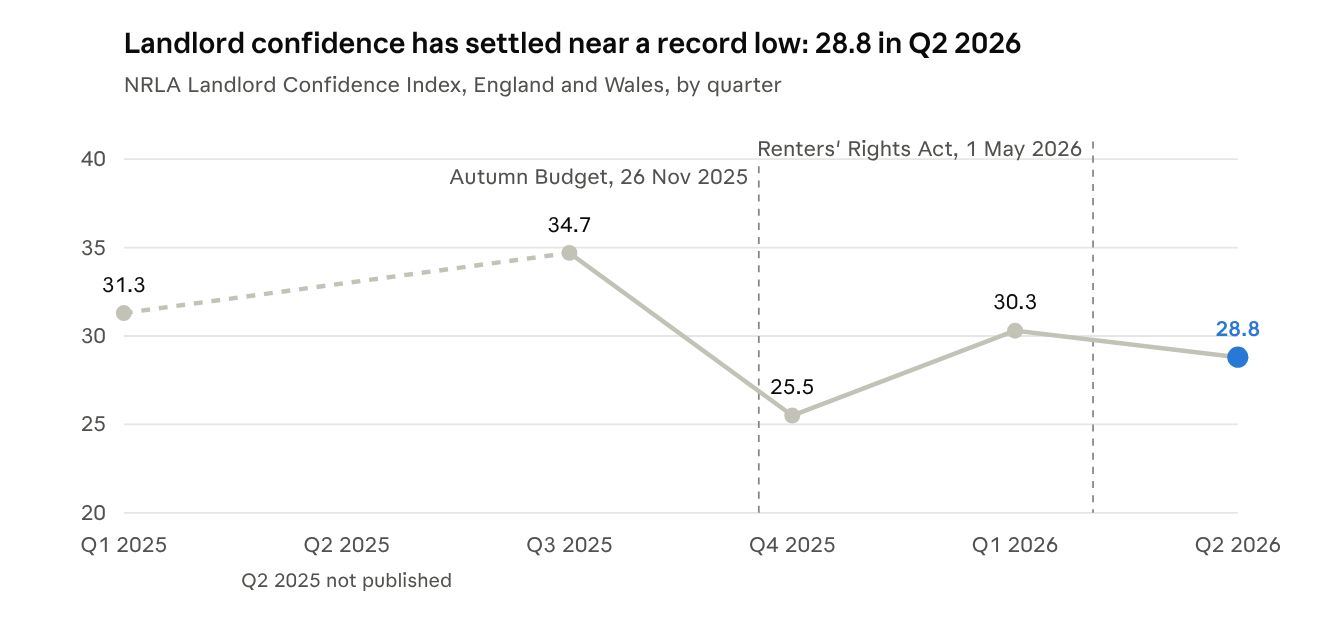
The NRLA's Landlord Confidence Index, which tracks how landlords feel about the year ahead, fell in the second quarter of 2026 to its third-lowest level since it began in 2019, and results from the autumn survey suggest little has improved since, with 55% of landlords saying they plan to sell some or all of their properties, and 22% planning to leave the market altogether by the end of next year. Just months after the Renters' Rights Act's main changes took effect, a quarter of the landlords surveyed said they had sold, or were selling, some of their properties.
The rules have changed, and the approach that worked five years ago will not always work now. But with fewer homes to let and tenants still competing for them, landlords who adapt are well placed.
The wider market
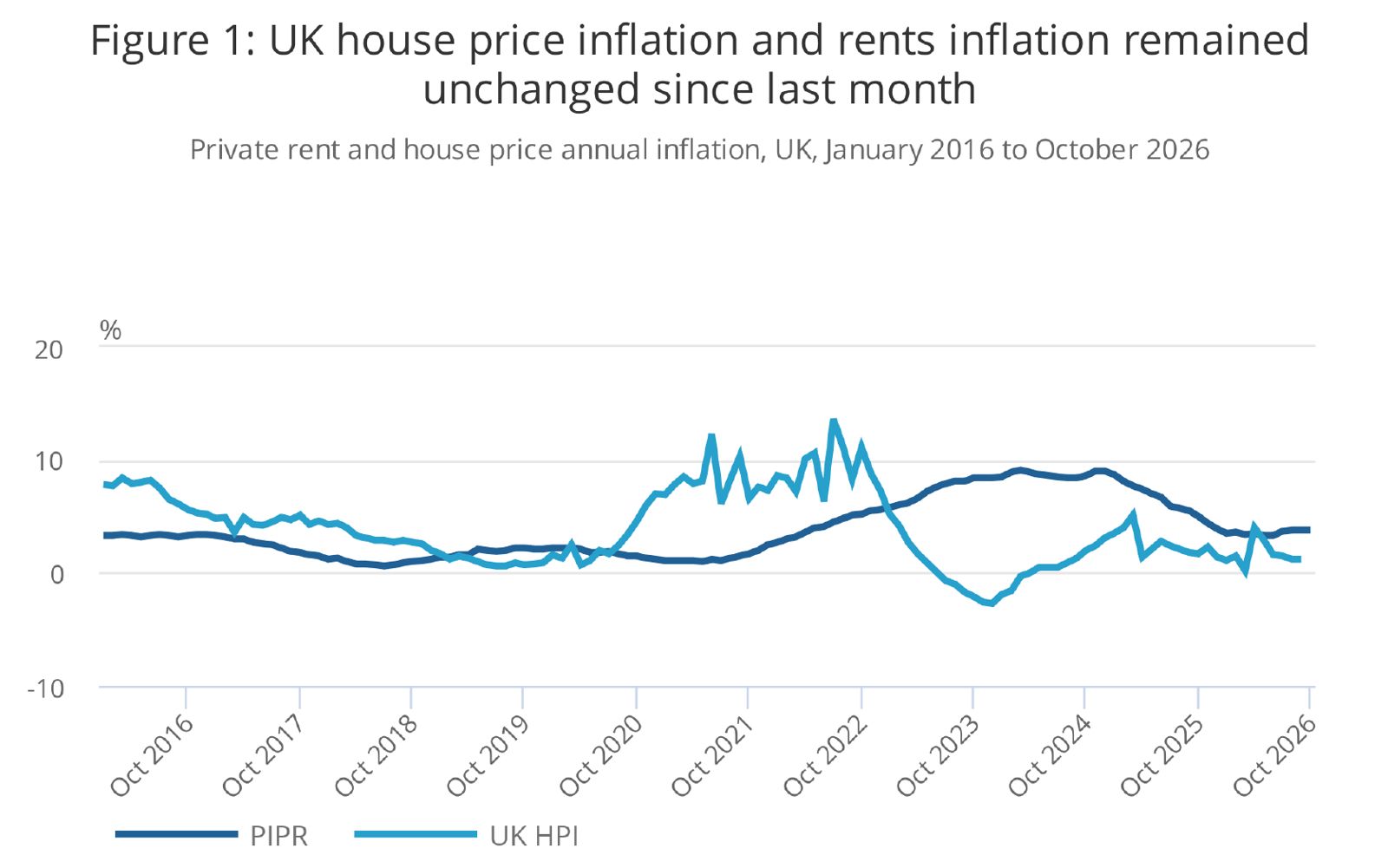
- Rents are still rising. The ONS puts the average UK rent at £1,411 a month in October, up 3.8% on a year earlier.
- House prices have flattened. Average house prices increased to £293,000 (0.8%) in England, £215,000 (1.8%) in Wales, with 35% of homes now in areas where prices are falling.
- Fewer rental homes, more tenants. In the RICS October survey for England and Wales, far more surveyors reported a fall in new landlord instructions than a rise, while tenant demand returned to growth.
- Rents expected to keep climbing. RICS surveyors' expectations for rents over the next three months are the strongest since early 2024.
- Affordability is the limit. The typical UK tenant now spends 32% of their income on rent, and just over 21% of applicants need a guarantor, up from 15% in May (HomeLet).
- Sales are slow. RICS surveyors expect sales and prices to ease a little further over the next year, and Zoopla shows homes taking 44 days to sell.
Confidence is near a record low
Confidence climbed through 2025, then fell sharply in the last quarter of the year to the second-lowest reading on record, as landlords braced for tax changes in the Autumn Budget. It recovered in early 2026, which the NRLA puts down to those fears not being fully realised, before slipping again once the Renters' Rights Act took effect in May 2026.
Why landlord confidence is low
- Rising costs. Running, repair, insurance, energy and finance costs rising with inflation, squeezing returns and often passed on in rents.
- Government policy. The pace of rule changes, with the Renters' Rights Act bringing new tenancy, rent and possession rules.
- Courts and possession. More cases going to court, and around six months to get a property back when things go wrong.
- Tax. Mortgage interest relief already capped and a stamp duty surcharge on extra homes, with tax on rental income rising again from April 2027.
- The new register. A new yearly fee and more admin for every property from December 2026.
- Energy standards. The cost of upgrades to reach EPC C by 2030, and uncertainty over what work and exemptions apply.
- Local licensing. Extra fees and paperwork in areas with licensing schemes.
What landlords are doing about it
- Feeling the squeeze. 77% of landlords said they were worse off than five years ago, and only 4% plan to buy more property.
- Smaller landlords are the most unsure. More than 60% of single-property landlords say they are no longer sure they will still be landlords by the end of next year.
- Saying versus doing. 22% of landlords actually sold in the year to June, well below the 38% who had said they would in earlier surveys.
- More careful lettings. Nearly 80% of landlords polled said they would be more selective about new tenants, and landlords told the NRLA they worry more about starting new tenancies than about existing ones.
- What keeps them going. Asked what makes letting worthwhile, 37% mentioned their tenants, and 32% their relationships with tenants specifically. Only 5% could not name a positive reason to carry on.
Low confidence is not the same as a bad market
With many landlords selling up or holding back because of higher costs, rising tax and tougher regulation, including the Renters' Rights Act, fewer homes are coming to the rental market, while demand to rent stays strong. More demand than supply pushes rents up. Buying, meanwhile, has become harder, as mortgage rates have risen again since the spring and affordability is stretched, so with fewer buyers, prices are flatlining.
The latest official figures, published by the ONS on 18 November 2026, show average private rents in England rose 4.0% to £1,472 a month in the year to October, with the North West highest at 5.6%. House prices, by contrast, rose just 0.8% in England in the year to September, well behind the rate of inflation, and fell 3.5% in London. On demand, the NRLA has said that more than five households are competing for each rental home, and surveyors report fewer landlords putting homes up to let. Individual and company landlords who stay, and run their lets well, are letting into a market short of good homes, and have a real opportunity.
Here are five things we would do now
- Get ready for the landlord register. It opens region by region from December 2026, and every landlord in England must be registered by November 2027. Our guide to the new landlord database explains what you need.
- Set rents on evidence. Under the new rules, setting rents and rent increases on evidence matters more than ever. Use rents actually achieved locally, and keep the property in good repair.
- Keep good records. Clear notes on rent, inspections and communication are your best protection if things go wrong.
- Plan for EPC C. Spreading improvements over the next few years costs less than leaving them until the 2030 deadline.
- Know your numbers. Keep good financial records and a plan for each property, covering where costs can come down, what your management costs are actually paying for, and whether there are better ways to grow your margins, before any decision to hold or sell.
Get The Property Debrief
Our take on the UK rental market, built on the latest official data. New editions are published on LinkedIn. Any questions? Get in touch, we would love to help.